Apple AI and Machine Learning
 Written byHarrij Mensinga
6 min read
Written byHarrij Mensinga
6 min read
Apple AI: How Artificial Intelligence Powers the Apple Ecosystem
Artificial Intelligence is no longer a future technology. It is embedded in the devices millions of people use every day. Apple has taken a distinctive approach to AI by focusing on intelligent features that enhance the user experience while prioritizing privacy, security, and seamless integration across its ecosystem.
Unlike many technology companies that rely heavily on cloud-based AI services, Apple combines powerful on-device processing with advanced machine learning models to deliver fast, personalized, and privacy-focused experiences. From Siri and Face ID to computational photography and Apple Intelligence, AI has become a core component of Apple’s products and services.
Apple’s Philosophy on Artificial Intelligence
Apple’s AI strategy differs from many competitors. Rather than positioning AI as a standalone product, Apple integrates intelligence directly into the operating system and hardware. The goal is simple: make technology more useful without making it more complicated.
This approach allows Apple devices to perform many AI tasks locally, reducing dependence on cloud servers and giving users greater control over their personal data. AI becomes an invisible assistant that works in the background to improve productivity, communication, photography, health monitoring, and device performance.
Machine Learning: The Foundation of Apple AI
At the heart of Apple’s artificial intelligence strategy is Machine Learning (ML), a branch of AI that enables systems to learn from data and improve their performance over time.
Machine learning powers many familiar Apple features, including:
- Face ID authentication
- Siri voice recognition
- Live Text image recognition
- Predictive typing and autocorrect
- Personalized recommendations
- Photo organization and search
- Health and fitness insights
- Translation and language processing
By incorporating ML throughout its ecosystem, Apple creates experiences that become more personalized and useful while maintaining strong privacy protections.
The Neural Engine: AI Hardware Built for Performance
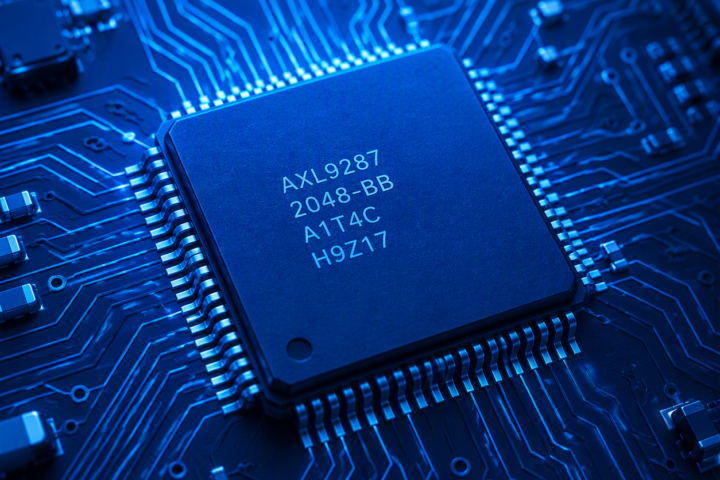
One of Apple’s most significant innovations is the Neural Engine, a dedicated hardware component designed specifically for AI and machine learning workloads.
Integrated into Apple’s A-series and M-series chips, the Neural Engine accelerates tasks that would otherwise require significantly more computing power from the CPU or GPU. This specialized hardware enables Apple devices to perform complex AI operations quickly and efficiently while consuming less energy.
Key benefits of the Neural Engine include:
- Faster Processing: AI-powered features such as image recognition, speech processing, and language understanding can be executed almost instantly.
- Improved Energy Efficiency: Dedicated AI hardware reduces the workload on the main processor, helping preserve battery life.
- Enhanced Privacy: Many AI tasks can be processed directly on the device, reducing the need to send sensitive information to external servers.
- Real-Time Intelligence: Applications can deliver immediate responses, whether identifying objects in photos, transcribing speech, or enhancing images during capture.
Apple Intelligence: The Next Generation of AI
Apple Intelligence represents Apple’s latest evolution in artificial intelligence. Designed to work across iPhone, iPad, and Mac, Apple Intelligence combines powerful generative AI capabilities with Apple’s existing focus on privacy and user control.
Apple Intelligence helps users:
- Rewrite, summarize, and proofread text
- Generate content suggestions
- Prioritize notifications
- Organize information more effectively
- Improve productivity across apps
- Interact with a more capable Siri experience
A key aspect of Apple Intelligence is its privacy-first architecture. Whenever possible, requests are processed directly on the device. For more advanced tasks that require additional computing resources, Apple uses Private Cloud Compute, a system designed to extend processing capabilities while maintaining strict privacy standards.
Siri: Apple’s Intelligent Assistant
Siri remains one of the most recognizable examples of AI within the Apple ecosystem. Over the years, Siri has evolved from a voice-controlled assistant into a more context-aware and intelligent interface.
Using advances in machine learning and natural language processing, Siri can:
- Understand spoken requests
- Control smart home devices
- Manage calendars and reminders
- Send messages and make calls
- Provide navigation assistance
- Perform searches across apps and settings
The integration of Apple Intelligence further enhances Siri’s ability to understand context, maintain conversations, and assist users more effectively.
AI in Photography and Video
Apple’s camera technology is one of the strongest examples of practical AI at work. Modern iPhone cameras rely heavily on machine learning to improve image quality automatically.
AI-powered photography features include:
- Computational Photography: The camera analyzes multiple frames and combines them to create a single optimized image.
- Smart HDR: Machine learning enhances highlights, shadows, and color balance for more natural-looking photos.
- Portrait Mode: AI detects subjects and creates professional-looking depth effects.
- Night Mode: Advanced algorithms improve image quality in low-light conditions.
- Deep Fusion: The system analyzes image data pixel by pixel to optimize texture, detail, and sharpness.
As a result, users can capture professional-quality images without needing advanced photography skills.
AI in Health and Wellness
Apple has increasingly utilized artificial intelligence to expand its health and wellness capabilities.
The Apple Watch uses machine learning to analyze data collected from multiple sensors, helping users better understand their health and activity levels.
AI-powered health features include:
- Heart rate monitoring
- Activity tracking
- Sleep analysis
- Fall detection
- Workout recommendations
- Heart rhythm notifications
By continuously analyzing patterns and trends, Apple devices can provide meaningful insights that help users make informed health decisions.
AI-Powered Productivity
Artificial intelligence also plays an important role in productivity features across Apple’s ecosystem.
Examples include:
- Predictive text and smart typing
- Automatic calendar suggestions
- Intelligent search
- Email organization
- Document summarization
- Voice transcription
- Real-time translation
These capabilities help users work more efficiently while reducing repetitive tasks.
Privacy as a Competitive Advantage
One of the defining characteristics of Apple’s AI strategy is its emphasis on privacy.
Apple frequently processes AI tasks on-device, ensuring that personal information remains under the user’s control whenever possible. Features such as Face ID, Live Text, and many language-processing tasks operate locally without sending sensitive data to external servers.
This privacy-first approach differentiates Apple from many AI competitors and reflects the company’s longstanding commitment to protecting user data.
The Future of Apple AI
Artificial intelligence is expected to become increasingly important across Apple’s product lineup. Future developments will likely focus on deeper personalization, smarter automation, enhanced productivity, and more natural interactions between users and devices.
As Apple continues to improve its chips, software, and AI models, users can expect more powerful intelligent features that work seamlessly across iPhone, iPad, Mac, Apple Watch, and future Apple products.
Conclusion
Apple’s approach to artificial intelligence is built around a simple principle: deliver powerful technology that enhances everyday life while protecting user privacy. Through machine learning, the Neural Engine, Apple Intelligence, and advanced on-device processing, Apple has created an ecosystem where AI works quietly in the background to make devices smarter, faster, and more useful.
From photography and productivity to health monitoring and personal assistance, Apple AI demonstrates how artificial intelligence can be integrated into technology in a way that feels natural, secure, and genuinely helpful for users.